
How to Wash Vintage Style Graphic Tees (2026 Care Guide)
Table of Contents
- Why Vintage Style Graphic Tees Need Different Care
- How to Wash Graphic Tees Inside Out: The Step-by-Step Method
- The Best Detergent for Graphic Tees (and What to Avoid)
- How to Dry Graphic T-Shirts Without Cracking the Print
- How to Remove Stains from Graphic Tees Safely
- Hand Washing, Water Hardness, and Storing Vintage Tees
- When to Wash, When to Skip, and Which Tees to Start With
- Conclusion
- Frequently Asked Questions
Last Updated: October 23, 2026
Why Vintage Style Graphic Tees Need Different Care
Vintage style graphic tees are printed to look and feel loved for years, and that worn-in look is what makes them fragile.
A vintage-style print is usually a surface layer sitting on top of the fabric, not a dye soaked into it, so heat, friction and harsh soap attack it directly.
At Galaxy Prints, every listing, from the Classic Retro Beech Mountain Club T-Shirt to the WHSL 97FM Retro Radio T-Shirt, carries the same care instructions: machine wash cold at 30C maximum, no bleach, no dry cleaning, low heat only.


So how to wash vintage style graphic tees without wrecking them? Cold water, inside out, gentle cycle, air dry. Everything below explains how to do each step properly.
How to Wash Graphic Tees Inside Out: The Step-by-Step Method
Turning a graphic tee inside out takes two minutes and protects the print from rubbing against other clothes, zippers and the drum.
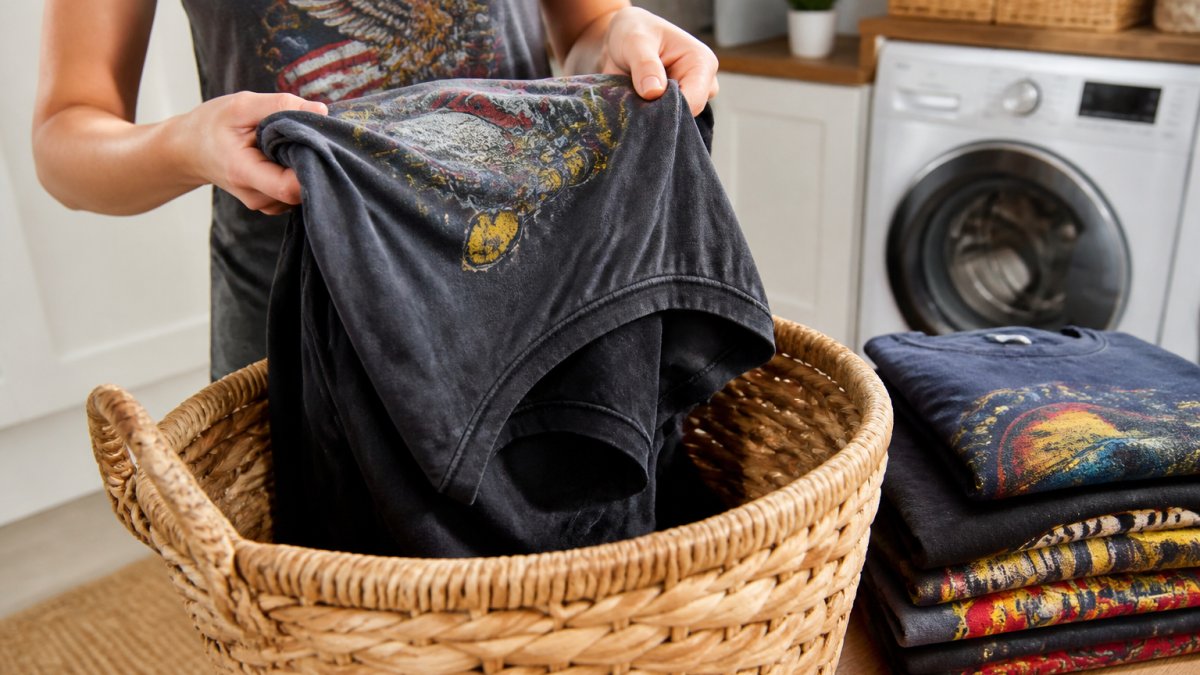
Step 1: Check the Care Label and Sort by Color
Read the care label for maximum water temperature, tumble drying and ironing rules. Then sort vintage tees with similar colors, away from jeans, towels and anything with zippers or hooks, since rough fabrics abrade prints in the drum.
- Wash lights with lights, darks with darks
- Keep tees out of loads with denim or heavy fleece
- Turn pockets out and close any zips on other items
Step 2: Turn the Tee Inside Out and Choose a Cold, Gentle Cycle
Turn the shirt fully inside out so the graphic faces inward, the core of how to wash graphic tees inside out, and the step people skip. Set the machine to cold water, no higher than 30C, on the delicate cycle with a short spin; high spin speeds stretch collars and press the print against the drum.
Expected result: the shirt comes out damp, not dripping, with the print still flat and unmarked.
The Best Detergent for Graphic Tees (and What to Avoid)
The best detergent for graphic tees is a mild, color-safe liquid with no bleach or brighteners, used sparingly. Liquid dissolves better in cold water than powder, which leaves gritty residue on the print.
What to avoid:
- Chlorine bleach. It strips print color and weakens cotton fibers.
- Powder detergent in cold water. It often fails to dissolve fully.
- Fabric softener on the print side. It coats the graphic and dulls it over time.
Use roughly half the amount you'd use for a normal load. With hard water, residue builds up faster as stiffness and a dull film on dark prints; a second cold rinse fixes it, and cutting your dose prevents it.
How to Dry Graphic T-Shirts Without Cracking the Print
The best way to dry graphic t-shirts is to air dry them, flat or hung, away from direct heat and sunlight. A tumble dryer is the number one cause of print cracking: heat makes the print layer expand and contract while the cotton shifts.
Here's how we dry ours:
- Gently press water out with a clean towel. Never wring or twist.
- Reshape the shirt while it's damp, especially the collar and shoulders.
- Lay it flat on a drying rack, or hang it on a wide plastic hanger.
- Keep it out of direct sun, which fades both print and fabric.
- Turn it right side out only once fully dry.
If you must use a dryer, use the lowest heat setting and pull the shirt out while still slightly damp. Our own care labels allow low-heat tumble drying, but air drying will always extend print life further.
How to Remove Stains from Graphic Tees Safely
Stain removal ruins most vintage-style tees, almost never the stain itself. The damage comes from the treatment: scrubbing that abrades a screen print, hot water that sets a protein stain, or a harsh chemical that lifts aged ink. Identify the stain, match the treatment to the print type, and know when to stop.
First, identify what kind of print you're treating
Before touching a stain, look at the graphic: what's safe for one print type can destroy another.
- Screen print (plastisol ink): A raised, rubbery layer sitting on top of the fabric. Generally the most durable, but solvent-based stain removers and repeated scrubbing can dull or crack the ink film.
- Water-based or discharge print: Ink soaked into the fibers rather than sitting on top. Softer hand-feel, but more vulnerable to bleach, peroxide, and prolonged soaking, which can shift the dye.
- DTG (direct-to-garment) print: Common on modern vintage-style tees, including many ring-spun cotton builds. The ink bonds to the fiber surface; aggressive rubbing and high heat are the main risks.
If you can't tell what the print is, assume it's the most fragile type and use the gentlest method.
The safe treatment order
Work from mildest to strongest, and stop as soon as the stain lifts. Treat from the inside of the garment outward and from the edge of the stain inward so you don't spread it.
Classic Retro Beech Mountain Club T-Shirt — Retro Throw Back to the Retired →
- Blot, don't rub. Press a clean white cloth onto the stain to lift what's wet. Rubbing pushes pigment into the fabric and roughens the print surface.
- Cold water flush. Hold the stained area under cold running water from the back of the fabric. Hot water sets most protein and dye stains permanently.
- A drop of plain dish soap for grease and food. Apply to the stain only, not the print, and let it sit five to ten minutes. Rinse cold.
- Baking soda paste for odors and light marks. Mix with water, apply to the stain, wait, rinse cold. Keep it off metallic or foil prints.
- Diluted white vinegar for deodorant buildup and mild discoloration. Dilute, apply briefly, rinse thoroughly. Never leave vinegar sitting on a print.
- Oxygen-based color-safe stain remover for stubborn marks on colorfast fabric. Test on an inside hem first and wait a full day before washing, since some reactions take hours to show.
Stain-specific cautions for vintage garments
- Oil and grease: Dish soap is usually enough. Avoid solvent spot cleaners on screen prints, since they can soften the ink film.
- Red wine, coffee, tea: Cold water flush first, then oxygen-based remover if needed. Never hot water.
- Ink and marker: These are the hardest on prints. Blot only; do not rub across the graphic.
When to stop and get professional help
Home stain treatment has a clear ceiling. Consult a textile conservator or a cleaner experienced with vintage garments if the tee is genuinely vintage, signed, or has resale or sentimental value; the print is cracking, flaking or tacky; the stain is large, set in or has been through a dryer; the fabric is thin, brittle or shows seam stress; or your first gentle attempt failed.
Hand Washing, Water Hardness, and Storing Vintage Tees
Hand washing is safest for delicate or genuinely old tees, and takes about ten minutes once you have the routine. But "hand wash" isn't one method, it changes with the fabric and print, and what happens after (water hardness, drying position, storage) decides whether the shirt survives the next decade.
Hand washing by fabric and print type
Fill a sink with cold water and a little mild, color-safe detergent. Submerge the shirt, press it gently under and let it sit five to ten minutes. Swirl softly, never wring, twist or scrub. Rinse cold until clear, press the water out with a clean towel, and lay flat to dry.
What changes by garment:
- 100% ring-spun cotton (most modern vintage-style tees): The standard method above works. Support the shirt's weight with both hands when lifting it wet, since saturated cotton stretches at the collar and shoulders.
- Cotton-poly blends: Less prone to shrinkage, but the print bond is the weak point. Keep the water cold and skip any soaking beyond ten minutes.
- Screen prints: The ink layer is the priority. Wash inside out, keep the print from rubbing against the basin, and never let detergent sit directly on the graphic.
Water hardness: the variable most guides skip
Hard water leaves calcium and magnesium deposits that make prints chalky, fabric stiff and dark dyes dull. It also reduces how well detergent rinses out, so residue builds up over repeated washes.
Signs you have hard water:
- White film or spotting on dark prints after drying.
- Stiff fabric straight out of a cold wash.
- Soap that doesn't lather well in the sink.
What to do about it:
- Use slightly less detergent, not more, hard water already reduces rinse efficiency.
- Add a second cold rinse cycle to flush minerals and residue.
- A half-cup of white vinegar in the rinse helps strip residue; it leaves no smell once dry.
Color transfer is the other variable: new, deeply dyed tees can bleed for several washes. Wash them alone or with similar darks the first two or three times, and never mix a new red with a pale vintage tee.
Drying position matters
- Lay flat heavy, stretched, or older tees so the weight of wet fabric doesn't pull the shoulders out of shape.
- Hang on a wide plastic hanger only for lightweight tees that hold their shape; wire hangers leave shoulder marks.
- Keep out of direct sunlight, UV fades both print and fabric, and it does so faster than most people expect.
Long-term storage for vintage tees
Storage protects a vintage tee as much as washing, and mistakes are cumulative.
- Fold, don't hang, heavy or stretched tees. Hanging stresses the shoulders and collar over months.
- Use acid-free tissue or a clean cotton pillowcase for valuable pieces; cardboard and some plastics off-gas and yellow fabric.
- Avoid sealed plastic bags. They trap moisture and promote mildew and dye transfer; breathable cotton bags are safer.
When to Wash, When to Skip, and Which Tees to Start With
Knowing how to wash vintage style graphic tees starts with timing: wash after two to three wears, or sooner if soiled or smelly. Skipping unnecessary washes extends print life, because every cycle adds a little wear.
Here's a quick decision guide:
| Situation | Action | Why |
|---|---|---|
| Worn once, no stains, no odor | Air out, rewear | Saves a full wash cycle |
| Worn 2-3 times | Cold gentle wash | Standard refresh |
| Visible stain | Spot treat, then wash cold | Stops the stain setting |
| Genuine vintage or fragile print | Hand wash only | Protects fragile ink layer |
| Sweated through or worn to a convention | Wash immediately | Salt and oils degrade prints |
If you're new to this, start with your least valuable printed tee, build the cold-wash, inside-out, air-dry habit on a shirt you don't mind risking. The B-Boys "Licensed to Ill" Autographed Band T-Shirt and the North Carolina 'HOGS 86' License Plate T-Shirt both use the same 100% ring-spun cotton build with a DTG print, so the routine transfers to whatever you buy next.

Conclusion
The hardest part isn't the washing, it's resisting the urge to toss the tee in with the towels on a hot cycle when you're in a hurry. That shortcut cracks prints and shrinks cotton.
Every tee we make at Galaxy Prints is built for that routine: lightweight 153 g/m² ring-spun cotton, a ribbed collar with shoulder tape that holds its shape, and DTG prints designed to survive repeated cold washes.
OEKO-TEX Standard 100 certification and textile care guidance
Frequently Asked Questions
How do you wash vintage style graphic tees without fading the design?
Wash vintage graphic tees inside out in cold water on a gentle or delicate cycle, using a small amount of mild or color-safe detergent. Skip bleach and fabric softener, and air dry or hang dry instead of using a tumble dryer. Heat is what breaks down screen print inks, so keeping every stage cool protects the graphic. For tees like the Classic Retro Beech Mountain Club T-Shirt, the care label recommends machine washing cold at a maximum of 30C with similar colors, which is the routine to follow for any vintage-style print.
Should you turn graphic tees inside out before washing?
Yes. Turning a graphic tee inside out is one of the simplest ways to protect the printed graphic from abrasion against the drum and other garments. It reduces surface friction that causes cracking, peeling, and fading over time. Pair it with a cold, gentle cycle and a mild detergent, and the print stays sharp far longer than if you wash the tee right side out. This matters most for screen print designs with large or detailed graphics.
What water temperature is best for washing graphic tees?
Cold water is the safest choice for vintage style graphic tees. Most care labels, including those on Galaxy Prints tees, specify a maximum of 30C (90F). Cold water limits shrinkage, slows color fading, and keeps print adhesives from breaking down. Hot water accelerates fabric wear and can cause screen prints to crack or peel. If a tee is heavily soiled, treat the stain directly before washing rather than raising the temperature.
How often should you wash a vintage graphic tee?
Wash a vintage graphic tee only when it actually needs it, usually every two to three wears if you wear an undershirt and air the tee between uses. Frequent washing speeds up fabric wear and print fading. Spot treat small marks instead of running a full wash, and always air dry. For collectible or fragile tees, hand washing in a sink with a small amount of mild soap is the gentlest option and extends the life of both the cotton and the print.
